
Capabilities China opportunities
China's evolving economic landscape is continually reshaping opportunities for investors. Explore the possibilities emerging across asset classes.

Accessing China’s expanding opportunity set
Invesco provides one of the largest and most comprehensive investment platforms in China with a broad range of capabilities including equities, fixed income, quantitative strategies, real estate and ETFs.
Investment opportunities
China presents significant investment opportunities as its GDP continues to grow, demographics are changing, and its correlation to other markets is low. Inclusion in global indices and China's ambitious climate change targets also offer the potential for other thematic opportunities.
Demographics
A growing population, urbanization, a well-educated labor force, and a growing middle-class with increasing levels of wealth are driving consumption growth.
Portfolio diversification
Historically, China’s correlation to other markets (both developed and emerging) has been very low. Lack of integration with other global markets has also allowed its capital markets to form unique characteristics.
Asset class opportunities
We believe that equities, fixed income, exchange traded funds (ETFs), and real estate are among the asset classes and investment vehicles that can present investment opportunities in China today. Here we share our insights on the benefits these classes can bring, how their markets function, and how offshore investors can access them.
Our close partnership with joint venture Invesco Great Wall (IGW), a leading domestic asset manager and long-term investor, provides access to cross-border investment opportunities including Mutual Recognition of Funds (MRF), Stock Connect, Bond Connect, and ETF Connect.
Latest insights
-

ETF ETF Connect: Why China dividend and low-volatility strategies are attracting investors
Christine Huang, Lizzy Liu
As China’s market evolves, dividend and low volatility A-shares are gaining global attention for their potential to deliver stable income, lower risk, and sustainable growth.August 31, 2026 -

ETF ETF Connect: Expanding China ETF access for cross-border investors
Lizzy Liu
ETF Connect is expanding access between Hong Kong and mainland China, helping investors diversify through eligible ETFs across both markets.July 13, 2026 -

Equities 2026 Midyear Investment Outlook – China Equities
Elton Cheung
Discover the 2026 midyear outlook for China equities, as AI innovation, policy support, earnings recovery, and liquidity shape market opportunities.May 29, 2026 -

Sustainable Investing Tsinghua-Invesco Research: Six sustainable investing tips for asset owners
Invesco
Tsinghua Invesco research outlines six practical shifts shaping sustainable investing for asset owners, from ESG integration and climate risk to impact, stewardship, and governance.April 27, 2026


Meet the team
-

Mike Shiao
Chief Investment Officer, Asia ex. Japan, Invesco
-

Elton Cheung
Head of Greater China Equities
-

Lijuan Du
Senior Fund Manager
-

Chris Liu
Senior Portfolio Manager, China A-shares
-

Bingli Nong
Fund Manager, Equity Investment, Invesco Great Wall
-
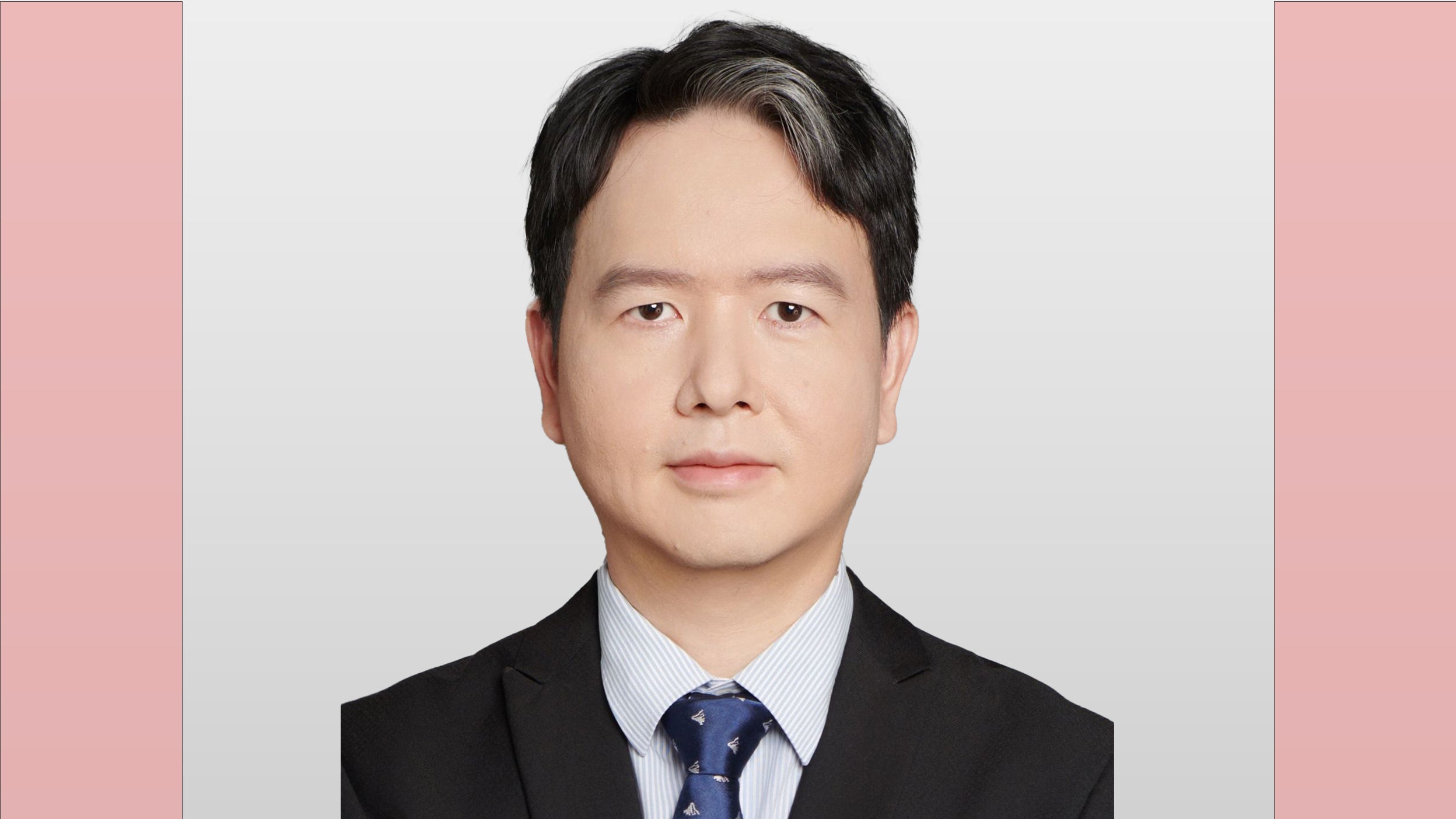
Haidong Ke
Fund Manager, Equity Investment, Invesco Great Wall


Benefits of broad Chinese equities investing
The Chinese equities are still subject to high volatility, but regardless of which active approach (fundamental or quantitative) investors choose, buying into companies that possess solid long-term prospects and can deliver earnings growth at an attractive valuation level may help investors capture strong alpha in the China market.
Our goal is to take advantage of market inefficiencies through a bottom-up fundamental analysis.
Competitiveness
Chinese companies are increasingly competitive, presenting good investment opportunities. Many have built strong financials and market share on the back of significant and growing domestic consumer demand and increasing international expansion.
Valuation
Reasonable valuation levels compared to both China’s history and relative to other developed and emerging markets.
Long-term investment horizon
Long-term fundamental investing can deliver alpha opportunities as the market is much less efficient than developed markets. The approach focusing on company fundamentals and targeting biases of investor behaviours,have worked well in China over the long term.
An all-shares approach
An "all shares" approach combines both onshore and offshore equities, and offers the broadest opportunity set and diversification for investing in China.
The investment universe spans large and mid-cap companies across China A-shares, B-shares, H-shares, Red-chips, P-chips, and foreign listings (ADRs).
| Onshore | Offshore | |||||
|---|---|---|---|---|---|---|
| Share | A - Shares | B - Shares | H - Shares | Red chips | P - chips | Forgein Listings (e.g. US Listed ADRs) |
| Description | Companies incorporated and listed mainland China. Available only to Chinese investors, or to international investors via QFII, RQFII, and Stock Connect Programs. Significantly larger and more diverse than the other shares and offshore markets. Greater focus on domestic and consumer-oriented companies. |
Companies incorporated and listed in mainland China, denominated in foreign currency. Open to foreign investors, but becoming increasingly less relevant due to relatively small universe. |
Chinese companies incorporated in mainland China, listed in Hong Kong. No restrictions on who can trade H-shares. Historically, the main way of getting China exposure for international investors. |
State-controlled Chinese companies incorporated in Hong Kong. Majority of revenue or assets derived from mainland China. |
Shares of Chinese companies incorporated offshore (e.g. Cayman Islands) controlled by mainland Chinese individuals. Majority of revenue or assets derived from mainland China. |
Chinese shares listed on international stock exchanges. American depository receipt (ADRs) are issued by banks and allow US investors to invest in non-US companies. |
| Stock Exchange (Currency) | Shanghai and Shenzhen (RMB) | Shanghai (USD) and Shenzhen (HKD) | Hong Kong (HKD) | Hong Kong (HKD) | Hong Kong (HKD) | NYSE and NASDAQ (USD)Description |
What are the options?
China fixed income includes a range of instruments. As international investors have become more familiar with China's offshore fixed-income market, here we focus on the lesser-known onshore market that's denominated in renminbi (RMB).
Like other markets, there are broadly three types of issuers in China's onshore bond market: governments, banks, and corporates. Bonds issued by governments and policy banks are named “rates bonds” by local investors, whereas bonds issued by commercial banks and corporates are called “credit bonds”. The key difference is that rates bonds are considered to have minimal credit risks, thus enjoy a significantly lower risk weight for bank investors.
Central government bonds, local government bonds and policy bank bonds in total account for 56% of bonds outstanding in China, followed by certificates of deposit and financial bonds, which are around 10% and 7% respectively of total market size. The remainder includes bonds issued by corporates, such as medium-term notes, commercial paper, enterprise bonds and corporate bonds in the exchange market.
What are the options?
There are four major real estate sectors in China: office, retail, industrial/logistics, and residential/apartments. Investment strategies in Chinese real estate are determined by macroeconomic trends, capital market cycles, regulatory developments and operational considerations.
Industrial/ Logistics
Look to macroeconomic and policy directions to ascertain prospects for this sector.
Growth of e-commerce sparks demand for warehouses and fulfilment centers
Offices
Nature of this sector is easily understandable as fundamentals and drivers of demand are similar to other markets.
Retail
Though China is one of the largest consumer markets in the world, popularity of e-commerce is affecting the sector’s growth.
Owners also need to be active in the management of tenant-retailer mix.
Residential
Considering that residential properties affect livelihoods, it is also a politically sensitive sector that requires on-the-ground and close scrutiny of trends
Other sectors
There are other niche options such as senior housing, data centers, hotels and car park spaces etc. These are more operationally intensive, where we often see the best margins coming not from owning but running them.
Beyond properties, debt financing is another option. This involves offering bridge financing options to developers who need short-term funds. This channel is exposed to dynamics that go beyond the real estate sector and into finance and pricing in the market.
What are the options?
China index-based exchange traded funds (ETFs) offer investors the chance to capitalize on China’s growth story by tracking a uniquely designed basket of publicly listed securities. Global investors in general are underweight Chinese securities, while many emerging markets-focused investors may wish to diversify away from products that will become increasingly loaded with China.
International investors may diversify their portfolios and gain efficient exposure to various onshore and offshore growth themes while leveraging the flexibility, liquidity, and transparency of an ETF structure.
As the world’s second largest economy, China is quickly becoming a global leader in innovation and technology. The country has been transforming from an “old” manufacturing and export economy to a “new” economy focusing on domestic consumption and services. The ongoing economic structural change is very much by design, supported by the country’s large market scale and government policies. China has unveiled its tech ambitions in its latest Five-Year Plan, as the country continues to strengthen its domestic growth and achieve “self-reliance” in science and technology.

Asia Pacific_Asia Pacific_Invesco Asia Pacific
Change site/location