Why so negative? Finding value in US corporate bonds
Kurz zusammengefasst
Our view
As yields across the globe continue to fall to record lows, many investors are now actually paying someone to take their money.
Currently, there are more than USD12 trillion of bonds with negative yields outstanding, which equal 24% of the global bond market.1 In Europe, the search for positive yield is especially challenging. Over half (51%) of the European bond market now yields a negative rate.1 Germany recently issued €5 billion of bunds at a price of €101.5, but these will only return €100 in two years with zero coupons paid.2 And according to Reuters, Austria is also rumoured to be planning to issue a 100-year bond at roughly 1% to feed yield hungry investors.
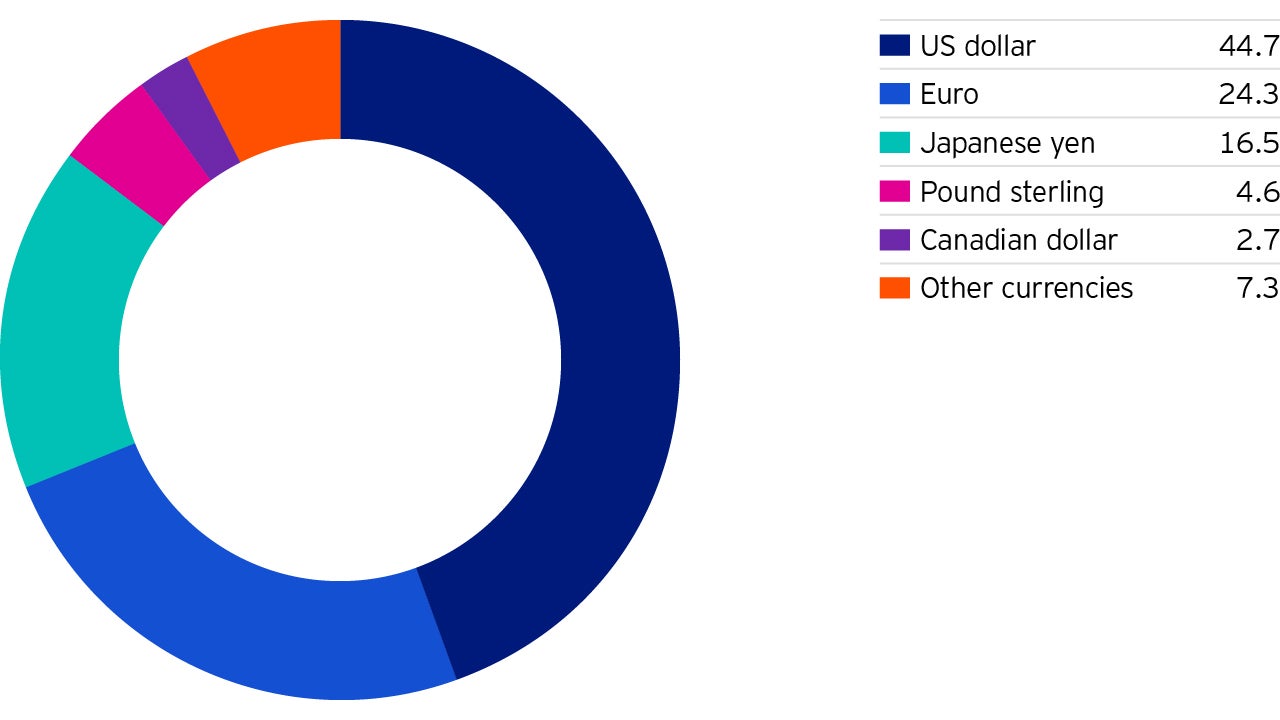
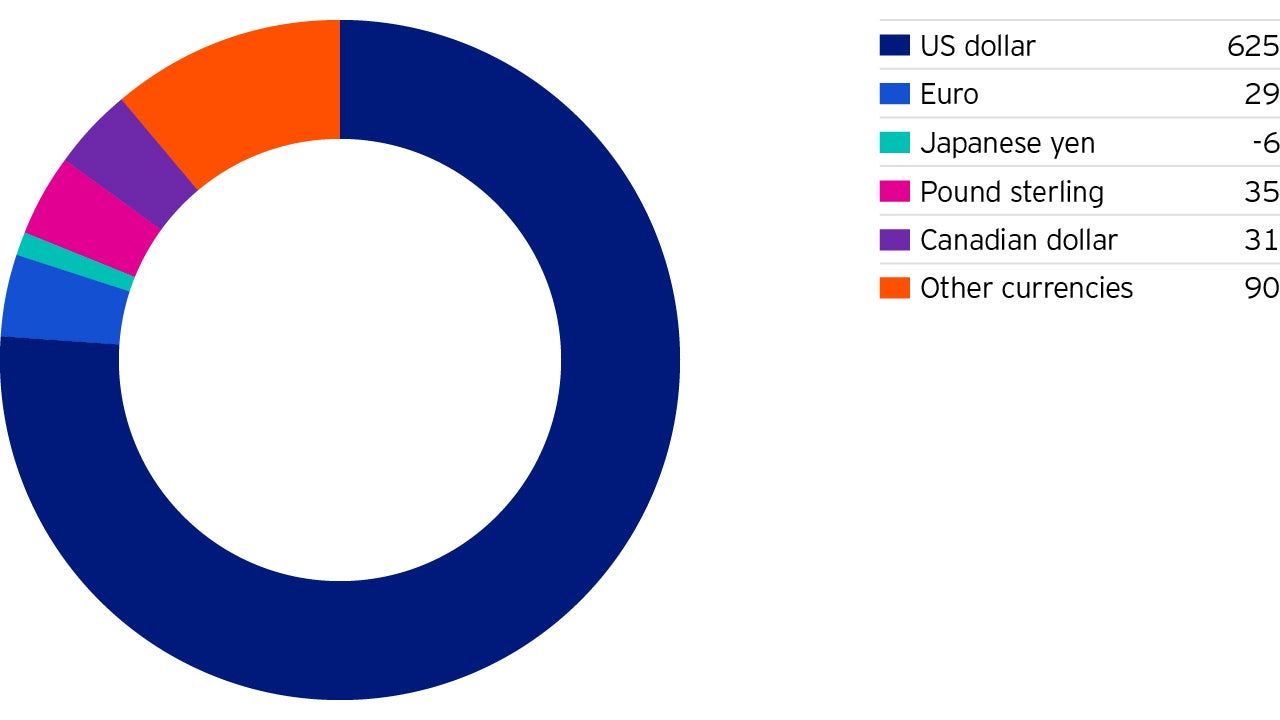
The US is currently the largest contributor of global fixed income yield While Europe and Japan account for 40.8% of the global bond market by market value, they generate only 2.8% of the income (figures 1 and 2).1 So where can yield-starved European and Asian investors find positive yields? Emerging markets like South Korea, China, Thailand and Indonesia have been positive yielding and account for 6.1% of global income generated from bonds.1 Developed but smaller debt markets such as the UK and Canada account for 8.1% of global income. The biggest source of yield is the United States, which contributes 77.9% of the globe’s fixed income yield, on only 44.7% of the debt.1

Figure 1: Bloomberg Barclays Global Aggregate Index – Market value by currency
Figure 2: Bloomberg Barclays Global Aggregate Index – Yield generated by currency (USD billion)
As the ECB considers rate cuts and additional bond purchases, Europe’s negative yield problem may only get worse. Potential interest rate cuts by the central banks of England, Australia, and Canada could compound the problem. To top it off, the Fed cut interest rates by 25 basis points at its July meeting.
-
In Zeiten tiefgreifender Umbrüche sind wir davon überzeugt, dass sich Resilienz bewährt und für das restliche Jahr ein vorteilhaftes Anlageumfeld bietet.15. Juni 2026 -
Asset-Allokation Vierteljährlicher Portfolioausblick für die globale Asset Allokation 2026
Paul Jackson
Entdecken Sie das „Invesco Big Picture“ von Paul Jackson, der sich mit aktuellen Themen, Märkten und Asset Allokation befasst.13. April 2026 -
Märkte und Wirtschaft US‑israelische Angriffe auf den Iran: Was Anleger wissen sollten
Benjamin Jones, Paul Jackson
Nach den US‑israelischen Angriffen auf den Iran skizzieren wir vier mögliche Szenarien für die kommenden Wochen und analysieren die potenziellen Reaktionen verschiedener Anlageklassen.3. März 2026 -
Anleihen Monatsbericht der Global Fixed Income Strategie
Invesco
Entdecken Sie unseren Monatsbericht der Global Fixed Income Strategie, der einen Ausblick auf die Entwicklung von Zinsen und Währungen gibt und sehen Sie sich an, welche festverzinslichen Anlagen unter verschiedenen Marktgegebenheiten besonders gefragt sind.27. Februar 2026 -
ETC Was treibt den Goldpreis in die Höhe? … und andere wichtige Fragen
Invesco
Die Kurse von Gold und Silber erreichten Anfang dieses Jahres neue Rekordstände. Erfahren Sie, warum die Preise für Edelmetalle so stark angestiegen sind und was Anleger wissen müssen, wenn sie diese Anlagen für ihre Portfolios in Betracht ziehen.25. Februar 2026 -
China Why China remains a springboard for electric vehicles
David Chao, Adrian Tong
Even as COVID-19 decimated global car sales, China’s EV sales still managed to grow by 12% during 2020, accounting for roughly 50% of EV sales globally.