ETF What are bond ladders, and how can they incorporate ETFs?
A bond ladder strategy buys a portfolio of bonds with sequential maturity dates to reduce interest rate risk and add flexibility and predictable income.
ETF ideas for five key 2026 investment themes

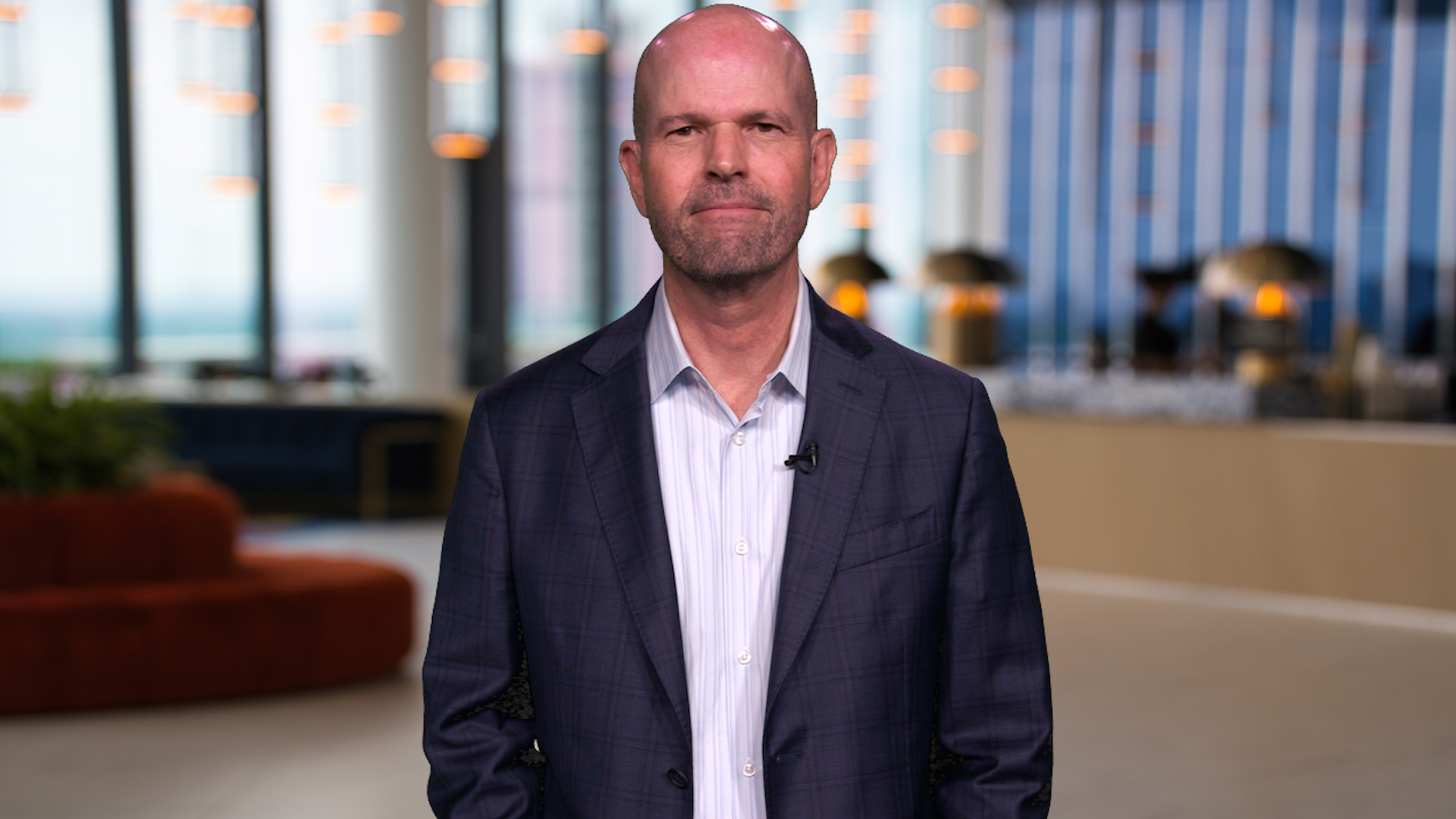
As our global market strategists look ahead to 2026, they believe the conditions are in place for global stock markets to further advance. Here are their five key investment themes for 2026 and the ETFs that may align with them.
1. Improved growth, broader participation
This lays the case for greater market participation down the capitalization spectrum and for cyclically-oriented sectors. RSP, the Invesco S&P 500 Equal Weight ETF, may benefit from the broadening of market performance. It maintains equal exposure across names in the S&P 500.
2. Reduce AI concentration risks
Segments of the artificial intelligence theme have become a little stretched, but a clear catalyst for consolidation remains unclear. We prefer rebalancing to manage concentration. One potential solution: Revenue weighting, which can be a simple, effective tool to get broad market exposure at lower valuations and with less concentration. Consider RWL, the Invesco S&P 500 Revenue ETF.
3. Lower policy rates
This would likely mean a steeper yield curve and a weaker dollar, so investors may want to step out of cash into ultrashort. GSY, Invesco Ultra Short Duration ETF, offers additional yield beyond cash, US Treasury bills, and money market funds without taking on significantly more interest rate risk.
4. Growth outside the US
Our strategists expect a weaker US dollar and growth outside of the US to support non-US assets. A high dispersion in the opportunities across international stocks may present a favorable backdrop for momentum investing. Consider IDMO, the Invesco S&P International Developed Momentum ETF, which tracks the S&P World Ex-U.S. Momentum Index.1
5. Private credit offers diversification
A more benign risk environment, better growth, and stable inflation, coupled with easier US monetary policy, are the typical conditions where private credit has performed well. BKLN, the Invesco Senior Loan ETF, provides exposure to senior loans, which have been highly correlated to private credit.2
Get our 2026 ETF investing ideas guide and more information about the ETFs mentioned below this video.
Important Information
1 The S&P World Ex-U.S. Momentum Index is designed to measure the performance of securities in developed markets, excluding the US and South Korea, that exhibit persistence in their relative performance.
2 Source: Bloomberg L.P. and CDLI as of September 30, 2025, the latest data available. The correlation between the Cliffwater Direct Lending Index (CDLI) and the Morningstar LSTA US Leveraged Loan 100 Index is 0.84 since the CDLI inception on Sept. 30, 2015. The CDLI is an asset-weighted index of directly originated middle market loans that was created to help investors better understand direct lending characteristics and benchmark manager performance. The Morningstar LSTA US Leveraged Loan 100 Index is designed to measure the performance of the 100 largest facilities in the US leveraged loan market. Index constituents are market-value weighted, subject to a single loan facility weight cap of 2%.
Not a Deposit | Not FDIC Insured | Not Guaranteed by the Bank | May Lose Value | Not Insured by any Federal Government Agency
Past performance is not a guarantee of future results. An investment cannot be made into an index.
This does not constitute a recommendation of any investment strategy or product for a particular investor. Investors should consult a financial professional before making any investment decisions.
The opinions expressed are those of Invesco and are based on current market conditions and are subject to change without notice. These opinions may differ from those of other Invesco investment professionals.
There are risks involved with investing in ETFs, including possible loss of money. Index-based ETFs are not actively managed. Actively managed ETFs do not necessarily seek to replicate the performance of a specified index. Both index-based and actively managed ETFs are subject to risks similar to stocks, including those related to short selling and margin maintenance. Ordinary brokerage commissions apply. The Fund's return may not match the return of the Index. The Funds are subject to certain other risks. Please see the current prospectus for more information regarding the risks associated with an investment in the Funds.
Standard & Poor’s, S&P, and S&P 500 are trademarks of Standard & Poor’s Financial Services, LLC, and have been licensed for use by Invesco Capital Management LLC and its affiliates. Invesco S&P 500® Equal Weight ETF is not sponsored, endorsed, sold, or promoted by Standard & Poor’s makes no representation regarding the advisability of investing in Invesco S&P 500® Equal Weight ETF.
GSY, BKLN
The Fund may hold illiquid securities that it may be unable to sell at the preferred time or price and could lose its entire investment in such securities.
The Fund currently intends to effect creations and redemptions principally for cash, rather than principally in-kind, because of the nature of the Fund's investments. As such, investments in the Fund may be less tax-efficient than investments in ETFs that create and redeem in-kind.
RSP, RWL, GSY, IDMO, BKLN
Investments focused in a particular industry or sector are subject to greater risk and are more greatly impacted by market volatility than more diversified investments.
IDMO, BKLN
The Fund may engage in frequent trading of its portfolio securities in connection with the rebalancing or adjustment of the Underlying Index.
The risks of investing in securities of foreign issuers can include fluctuations in foreign currencies, political and economic instability, and foreign taxation issues.
RSP
Stocks of medium-sized companies tend to be more vulnerable to adverse developments, may be more volatile, and may be illiquid or restricted as to resale.
RWL
The Fund may become “non-diversified,” as defined under the Investment Company Act of 1940, as amended, solely as a result of a change in relative market capitalization or index weighting of one or more constituents of the Index. Shareholder approval will not be sought when the Fund crosses from diversified to non-diversified status under such circumstances.
GSY
Mortgage- and asset-backed securities, which are subject to call (prepayment) risk, reinvestment risk, and extension risk. These securities are also susceptible to an unexpectedly high rate of defaults on the mortgages held by a mortgage pool, which may adversely affect their value. The risk of such defaults depends on the quality of the mortgages underlying such security, the credit quality of its issuer or guarantor, and the nature and structure of its credit support.
The investment techniques and risk analysis used by the portfolio managers may not produce the desired results.
If the seller of a repurchase agreement defaults on its obligation or declares bankruptcy, delays in selling the securities underlying the repurchase agreement may be experienced, resulting in losses.
Interest rate risk refers to the risk that bond prices generally fall as interest rates rise and vice versa. An issuer may be unable to meet interest and/or principal payments, thereby causing its instruments to decrease in value and lowering the issuer’s credit rating.
The Fund will invest in bonds with short-term maturity (one year or less), which may have additional risks, including interest rate changes over the life of the bond. The average maturity of the Fund's investments will affect the volatility of the Fund's share price.
The risks of investing in securities of foreign issuers, including emerging market issuers, can include fluctuations in foreign currencies, political and economic instability, and foreign taxation issues.
Issuers of sovereign debt or the governmental authorities that control repayment may be unable or unwilling to repay principal or interest when due, and the Fund may have limited recourse in the event of default. Without debt holder approval, some governmental debtors may be able to reschedule or restructure their debt payments or declare moratoria on payments.
Because the Fund may invest in other investment companies, it's subject to the risks associated with the investment company, and its investment performance may depend on the underlying investment company's performance. Moreover, the Fund and its shareholders will incur its pro rata share of the underlying investment companies’ expenses, which will reduce the Fund’s performance, and the purchase of shares of some investment companies.
Municipal securities are subject to the risk that legislative or economic conditions could affect an issuer’s ability to make payments of principal and/ or interest.
The Fund’s income may decline when interest rates fall if it holds a significant portion of short-duration securities and/or securities with floating or variable interest rates. If the Fund invests in lower-yielding bonds, as the bond’s portfolio matures, the Fund will need to purchase additional bonds, thereby reducing its income.
Obligations issued by US government agencies and instrumentalities may receive varying levels of support from the government, which could affect the fund’s ability to recover should they default.
The credit research process utilized by the Fund to implement its investment strategy in pursuit of its investment objective considers factors that include, but are not limited to, an issuer's operations, capital structure, and environmental, social, and governance (ESG) considerations. Credit quality analysis, therefore, may consider whether any ESG factors pose a material financial risk or opportunity to an issuer.
Derivatives may be more volatile and less liquid than traditional investments and are subject to market, interest rate, credit, leverage, counterparty, and management risks. An investment in a derivative could lose more than the cash amount invested.
IDMO
The performance of an investment concentrated in issuers of a certain region or country, such as Japan and the European Union, is expected to be closely tied to conditions within that region and to be more volatile than more geographically diversified investments.
Momentum style of investing is subject to the risk that the securities may be more volatile than the market as a whole, or returns on securities that have previously exhibited price momentum are less than returns on other styles of investing.
Stocks of medium-sized companies tend to be more vulnerable to adverse developments, may be more volatile, and may be illiquid or restricted as to resale.
Investments focused in a particular industry, such as financial, are subject to greater risk, and are more greatly impacted by market volatility, than more diversified investments.
The Fund may become non-diversified, as defined under the Investment Company Act of 1940, as amended, solely as a result of a change in relative market capitalization or index weighting of one or more constituents of the Index. Shareholder approval will not be sought when the Fund crosses from diversified to non-diversified status under such circumstances.
BKLN
Most senior loans are made to corporations with below investment-grade credit ratings and are subject to significant credit, valuation, and liquidity risk. The value of the collateral securing a loan may not be sufficient to cover the amount owed, may be found invalid, or may be used to pay other outstanding obligations of the borrower under applicable law. There is also the risk that the collateral may be difficult to liquidate, or that a majority of the collateral may be illiquid.
An issuer may be unable to meet interest and/or principal payments, thereby causing its instruments to decrease in value and lowering the issuer's credit rating.
Interest rate risk refers to the risk that bond prices generally fall as interest rates rise and vice versa.
Non-investment grade securities may be subject to greater price volatility due to specific corporate developments, interest-rate sensitivity, negative perceptions of the market, adverse economic and competitive industry conditions, and decreased market liquidity.
The Fund is non-diversified and may experience greater volatility than a more diversified investment.
Reinvestment risk is the risk that a bond’s cash flows (coupon income and principal repayment) will be reinvested at an interest rate below that on the original bond.
The Fund's use of a representative sampling approach will result in its holding a smaller number of securities than are in the underlying Index, and may be subject to greater volatility.
Under participation in senior loans, the fund generally will have rights that are more limited than those of lenders or of persons who acquire a senior loan by assignment. In a participation, the fund assumes the credit risk of the lender selling the participation in addition to the credit risk of the borrower. In the event of the insolvency of the lender selling the participation, the fund may be treated as a general creditor of the lender and may not have a senior claim to the lender's interest in the senior loan. Certain participations in senior loans are illiquid and difficult to value.
Shares are not individually redeemable, and owners of the Shares may acquire those Shares from the Fund and tender those Shares for redemption to the Fund in Creation Unit aggregations only, typically consisting of 10,000, 20,000, 25,000, 50,000, 75,000, 80,000, 100,000, or 150,000 Shares.
Invesco Distributors, Inc. 01/26 NA5105265
As our global market strategists look ahead to 2026, they believe the conditions are in place for global stock markets to further advance. Here are their five key investment themes for 2026 and the ETFs that may align with them.
1. Improved growth, broader participation
This lays the case for greater market participation down the capitalization spectrum and for cyclically-oriented sectors. RSP, the Invesco S&P 500 Equal Weight ETF, may benefit from the broadening of market performance. It maintains equal exposure across names in the S&P 500.
2. Reduce AI concentration risks
Segments of the artificial intelligence theme have become a little stretched, but a clear catalyst for consolidation remains unclear. We prefer rebalancing to manage concentration. One potential solution: Revenue weighting, which can be a simple, effective tool to get broad market exposure at lower valuations and with less concentration. Consider RWL, the Invesco S&P 500 Revenue ETF.
3. Lower policy rates
This would likely mean a steeper yield curve and a weaker dollar, so investors may want to step out of cash into ultrashort. GSY, Invesco Ultra Short Duration ETF, offers additional yield beyond cash, US Treasury bills, and money market funds without taking on significantly more interest rate risk.
4. Growth outside the US
Our strategists expect a weaker US dollar and growth outside of the US to support non-US assets. A high dispersion in the opportunities across international stocks may present a favorable backdrop for momentum investing. Consider IDMO, the Invesco S&P International Developed Momentum ETF, which tracks the S&P World Ex-U.S. Momentum Index.1
5. Private credit offers diversification
A more benign risk environment, better growth, and stable inflation, coupled with easier US monetary policy, are the typical conditions where private credit has performed well. BKLN, the Invesco Senior Loan ETF, provides exposure to senior loans, which have been highly correlated to private credit.2
Additional ETF resources
A bond ladder strategy buys a portfolio of bonds with sequential maturity dates to reduce interest rate risk and add flexibility and predictable income.
An ETF's fair market value may be gauged using net asset value (NAV), which is based on its underlying assets and may lead to premiums and discounts.
With a surge in leveraged spending, concentrated market leadership, and high forward P/E ratios, there’s a risk of overstretched valuations.
Important Information
NA5191245
There are risks involved with investing in ETFs, including possible loss of money. Index-based ETFs are not actively managed. Actively managed ETFs do not necessarily seek to replicate the performance of a specified index. Both index-based and actively managed ETFs are subject to risks similar to stocks, including those related to short selling and margin maintenance. Ordinary brokerage commissions apply. The Fund's return may not match the return of the Index. The Funds are subject to certain other risks. Please see the current prospectus for more information regarding the risks associated with an investment in the Funds.
This link takes you to a site not affiliated with Invesco. The site is for informational purposes only. Invesco does not guarantee nor take any responsibility for any of the content.