
Markets and Economy Are we there yet? Bull market may have more miles
Brian Levitt
October 19, 2026

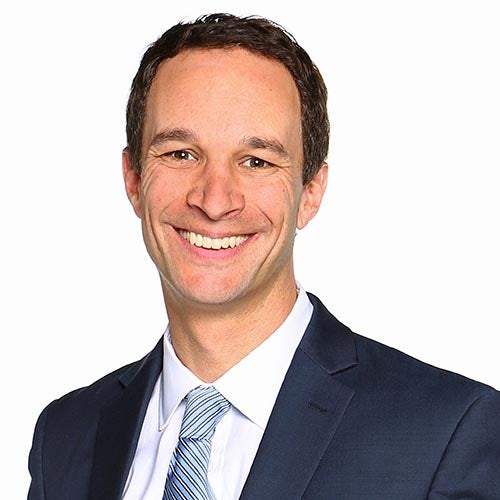



While Warsh is expected to eventually be confirmed by the Senate, the process may not be entirely straightforward.
Warsh will likely face questions concerning Fed independence and his thoughts on recent political pressure on Fed officials.
Warsh’s background and Fed experience could help support its independence and financial system stability.
After months of speculation — and in a somewhat hawkish surprise — President Donald Trump has nominated Kevin Warsh to serve as the next chair of the Federal Reserve (Fed). Pending Senate confirmation, Warsh will succeed Jerome Powell once Powell’s term as chair ends in May 2026.
With Warsh now officially nominated, attention turns to the Senate confirmation process and how markets will respond to a potential policy pivot under new Fed leadership. While Warsh is expected to eventually be confirmed by the Senate, the process may not be entirely straightforward. Senator Thom Tillis has vowed to block any of the President’s nominees for Fed chair until an investigation into the central bank's building renovation is resolved.
In the meantime, Warsh’s confirmation hearing will be especially important. With heightened scrutiny of the Fed by the White House, he’ll likely face questions concerning central bank independence and his thoughts on recent political pressure facing Fed Chair Powell and Fed Governor Lisa Cook. Warsh’s testimony will also provide market participants with an opportunity to garner insight into his potential policy priorities and how his approach may differ from that of Powell’s.
Warsh served as a member of the Federal Reserve Board of Governors from 2006 to 2011 and remains a prominent figure in US monetary and macro‑financial circles. His past policymaking experience — spanning crisis‑era time at the Fed and earlier service as a senior economic adviser to President George W. Bush — positions him as someone who could quickly command the respect of his new colleagues on the Federal Open Market Committee (FOMC).
Prior to his roles at the White House and Fed, Warsh was an executive director of mergers and acquisitions (M&A) and capital markets at Morgan Stanley. Since leaving the Fed, he’s held roles in academia at Stanford University and private-sector leadership positions as a partner at Duquesne Family Office and board member at UPS.
Warsh’s combination of senior White House economic advisory experience, monetary policy expertise, and deep capital‑markets knowledge made him a strong contender for Fed chair. From President Trump’s perspective, Warsh’s background had two benefits: He would be seen as credible by financial markets, and he stood a strong chance of securing Senate approval.
Additionally, from a policy and ideological standpoint, Warsh’s views aligned well with those of the White House. He has recently advocated for lower policy rates — which aligned with Trump’s desire for further interest‑rate cuts — and he has been sharply critical of the Fed, arguing that “mission creep” has pushed the institution away from its dual mandate of maximum employment and price stability. Warsh also has longstanding ties to the Republican Party, having served in the W. Bush administration. He was also previously a Fed chair finalist during Trump’s first term in 2017.
Warsh emerged as one of the more hawkish voices during his time at the Fed, at times opposing rate cuts during the 2008 Global Financial Crisis out of concern that inflation risks were being underestimated.
At first glance, his monetary policy track record would seem to conflict with President Trump’s desire for lower rates, although his tone has shifted in recent months. Warsh is currently in favor of greater policy easing in 2026, driven by a view that productivity gains could boost US economic growth without driving higher inflation, therefore allowing rates to come down. Beyond 2026, though, the policy outlook could become unclear if inflationary pressures continue to linger.
Regarding the Fed’s balance sheet, Warsh is known for his hawkish views and long-standing critique of quantitative easing. However, he has also advocated for closer alignment between the Fed and US Treasury, and use of the Fed’s balance sheet could be employed to help tackle housing affordability — a key priority of the Trump administration this year. Therefore, it would not come as a surprise if Warsh were to take a more pragmatic approach to balance sheet management, despite his past comments against such action.
Finally, Warsh has been a vocal critic of what he sees as a Fed that has grown too large, interventionist, and distracted from its core mission. These failings, he argues, have undermined the Fed’s credibility and contributed to recent policy mistakes. As chair, Warsh would likely attempt to narrow the central bank’s focus back to its dual mandate.
He has also expressed a desire to update the Fed’s forecasting methodology, which he has argued repeatedly fails at identifying economic turning points. As a result, a Warsh-led Fed may take a more forward-looking approach to monetary policy, in contrast to the backward-looking data-dependent approach pursued by the Fed in recent years.
Financial markets have initially interpreted Warsh’s nomination as hawkish. Immediately following President Trump’s announcement, Treasury rates climbed, the US dollar strengthened, gold prices plunged, and stock futures fell.1
Over time, however, we don’t think Warsh will prove as hawkish as markets seem to expect and his past actions seem to suggest. Warsh’s policymaking background and prior experience at the Fed should lend support to central bank independence and financial system stability. This may help inflation expectations and US borrowing costs, which remain contained. Also, his private-sector experience could result in further banking deregulation, providing a tailwind to credit expansion and US growth.
In our view, a politically independent and market-friendly Fed, under a Warsh chairmanship, would be constructive for stocks.


Important information
NA5175602
Image: Fandrade / Getty
All investing involves risk, including the risk of loss.
Past performance does not guarantee future results.
Investments cannot be made directly in an index.
This does not constitute a recommendation of any investment strategy or product for a particular investor. Investors should consult a financial professional before making any investment decisions.
Monetary easing refers to the lowering of interest rates and deposit ratios by central banks.
The Federal Open Market Committee (FOMC) is a committee of the Federal Reserve Board that meets regularly to set monetary policy, including the interest rates that are charged to banks.
The Board of Governors of the Federal Reserve System is a US federal agency that guides the operation of the Federal Reserve System, including overseeing the operations of the 12 Reserve Banks.
Fluctuations in the price of gold and precious metals may affect the profitability of companies in the gold and precious metals sector. Changes in the political or economic conditions of countries where companies in the gold and precious metals sector are located may have a direct effect on the price of gold and precious metals.
Hawkish describes a central bank or policymaker's preference for a tighter monetary policy, typically to combat inflation.
Inflation is the rate at which the general price level for goods and services is increasing.
A policy rate is the rate used by central banks to implement or signal their monetary policy stance.
Quantitative easing (QE) is a monetary policy used by central banks to stimulate the economy when standard monetary policy has become ineffective.
The S&P 500® Index is an unmanaged index considered representative of the US stock market.
A spot price is the current market price at which an asset is bought or sold for immediate payment and delivery.
In general, stock values fluctuate, sometimes widely, in response to activities specific to the company as well as general market, economic, and political conditions.
The US Dollar Index measures the value of the US dollar relative to the majority of its most significant trading partners.
The opinions referenced above are those of the author as of Jan 30, 2026. These comments should not be construed as recommendations, but as an illustration of broader themes. Forward-looking statements are not guarantees of future results. They involve risks, uncertainties, and assumptions; there can be no assurance that actual results will not differ materially from expectations.
This link takes you to a site not affiliated with Invesco. The site is for informational purposes only. Invesco does not guarantee nor take any responsibility for any of the content.
Change site/location
