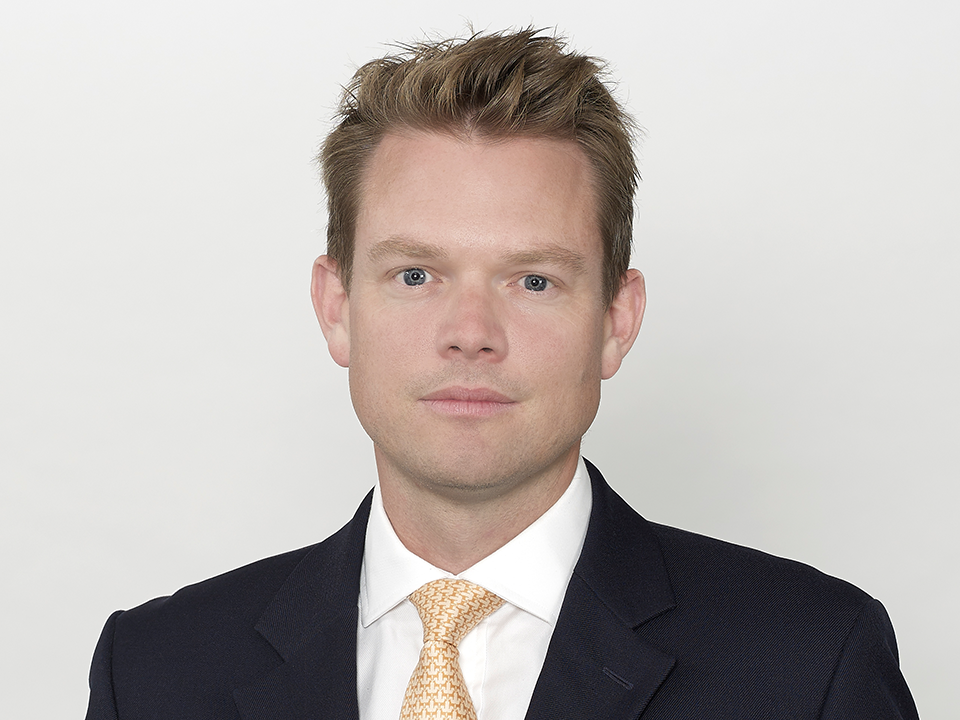
Q&A with Andrew Hall – Transcript
Presented by Andrew Hall, Fund Manager, Invesco Global Equities
Amanda Clegg, Director - Investment Strategy
Amanda:
Hi, Andy. Great to have you here. You’re the lead fund manager for our fundamental global equity strategy. Can you tell me a bit about yourself and your role?
Andrew:
Great. Well, thanks for having me, Amanda. I’ve been at Invesco now for 13 years, and I’ve been in the markets for 25 years. I started running the global equity strategy at the beginning of 2020.
Amanda:
And where are you based?
Andrew:
We’re based in Henley-on-Thames, which is about 30 miles west of London. It’s a beautiful village right by the river, famous for the annual rowing regatta. We actually think it’s a really important source of competitive advantage being based there.
One of the key benefits is that if you think about what’s most important about our job, it’s making decisions under pressure and uncertainty. Being based in Henley is a real advantage. If there’s a big decision to be made, we can go for a walk by the river, talk it through, and discuss it. In that calm environment, it’s really helpful when making difficult decisions.
Amanda:
Why should investors invest in your strategy?
Andrew:
There are three defining elements of the strategy. The first is the people. We’ve spent the last 12 or 13 years very deliberately building a team of individuals who buy into our key cultural beliefs. The most important of these is partnership. We think of each other as partners on this journey, and crucially, we think of our clients as partners too. That culture of partnership and focus on doing the best we can for clients is a key underpinning.
The second element is a culture of continuous improvement. Every year we hold an offsite where we openly discuss mistakes as well as wins. We look for ways to iterate and improve our process based on those reflections. That culture has stood us in good stead over the years.
From a philosophy perspective, it’s pretty simple. We’re looking to buy good businesses with strong balance sheets, run by managers we trust. The process is designed to implement that philosophy efficiently through time.
Amanda:
What makes your strategy particularly unique?
Andrew:
It’s hard to know what makes us unique given how many global equity managers there are, but a couple of elements stand out. The first is behavioural psychology. Emily studied experimental psychology at university and brought those theoretical foundations into our investment process. We’ve tried to identify key behavioural biases we see in ourselves and in other investors and embed steps in the process that help us overcome those biases.
The second is the relatively unique experiences within the team. One of those is the four years I spent working for a hedge fund manager focused on shorting. That experience helped us design a process to avoid value traps — understanding why a business might be losing its competitive position or where hidden financial liabilities might exist. We’ve spent a lot of time building that thinking into the process, which we believe has helped us avoid a number of pitfalls.
Amanda:
What market environments do you expect the strategy to perform well in?
Andrew:
We have a bias toward owning what are often called quality businesses — businesses that can sustainably reinvest capital at high rates of return. We like companies that are relatively predictable in nature. In environments where those businesses are in favour, that’s a tailwind for the strategy.
The environment we like least is a highly momentum‑driven market, like the one we’re seeing in 2025. It’s shaping up to be potentially the second‑most momentum‑driven market on record, outside of the late‑1990s TMT boom. That’s not an environment the strategy is particularly well suited to.
Amanda:
Let’s talk about AI. Bubble or not?
Andrew:
We think it does have some bubble‑like characteristics. In the years leading up to 2025, most AI investment was funded by Microsoft, Google, Amazon, and Meta — large, cash‑generative companies with net cash balance sheets. That limited the risks because they were funding investment organically while also benefiting from AI‑driven revenue growth.
What’s changed in 2025 is the proliferation of players. OpenAI is a good example. It’s generating around $13 billion in annualised revenue but has committed to more than a trillion dollars of capex over the next decade. If that business doesn’t scale profitably, supporting those investments could become a risk.
Debt has also entered the picture this year, with roughly $250 billion of bonds issued to fund AI investment. That adds another layer of vulnerability. As 2025 has progressed, more elements of caution have entered our thinking.
Amanda:
How are you positioning the portfolio in relation to AI?
Andrew:
We’re balancing two ideas. Over the long term, we still believe AI could be the most important technology of our generation. Applications like autonomous driving, humanoid robots, and agentic AI suggest we’re still very early in the adoption curve.
At the same time, the pace of investment has become exponential, which increases the risk of an air pocket that we need to navigate carefully.
Amanda:
Can you bring the strategy to life with an example of a company you invest in?
Andrew:
One example is Martin Marietta. It’s not a particularly exciting business — they quarry rock and sell it to contractors building roads, data centres, or houses. Aggregates are essential to construction.
Aggregates cost around $20 a ton, so transportation costs matter a lot. As a result, aggregates rarely travel more than 20 or 30 miles. That makes well‑located quarries extremely valuable. Over the last 20 to 30 years, Martin Marietta has built a portfolio of very well‑located quarries, giving them strong pricing power.
They’re currently raising prices by around 6–7% per year, which is rare in global markets. That pricing power is what makes the business attractive.
Amanda:
Before you go, we have some quickfire questions. What’s the best investing advice you’ve ever received?
Andrew:
It didn’t come from an investor — it came from my dad. He always said, “Decide in haste, repent at your leisure.”
Amanda:
Morning person or night owl?
Andrew:
My best time is after the gym in the early afternoon.
Amanda:
What’s the biggest risk investors often overlook?
Andrew:
The balance sheet.
Amanda:
One song that gets you pumped before a big day?
Andrew:
“The Final Countdown.”
Amanda:
If you weren’t a portfolio manager, what would you be doing?
Andrew:
When I was a kid, I wanted to be an architect.
Amanda:
What’s the hardest lesson you’ve learned in investing?
Andrew:
No matter how hard you work or how much time you spend thinking, that’s no guarantee of success — but it probably is a prerequisite.
Amanda:
What was your very first investment?
Andrew:
At university we did a case study on Tesco, and I ended up buying the shares.
Amanda:
Tea or coffee?
Andrew:
Coffee in the morning, tea in the evening.
Amanda:
Describe your investment philosophy in three words.
Andrew:
Own good companies.
Amanda:
Very good. Thanks, Andy.
Andrew:
Thanks for having me, Amanda.
Disclosures (not being read, only showing up on screen):
Investment risks
The value of investments and any income will fluctuate (this may partly be the result of exchange rate fluctuations) and investors may not get back the full amount invested.
The strategy may use Stock Connect to access China A Shares traded in mainland China. This may result in additional liquidity risk and operational risks including settlement and default risks, regulatory risk and system failure risk.
The strategy may use derivatives (complex instruments) in an attempt to reduce the overall risk of its investments, reduce the costs of investing and/or generate additional capital or income, although this may not be achieved. The use of such complex instruments may result in greater fluctuations of the value of the strategy. The Manager, however, will ensure that the use of derivatives within the strategy not materially alter the overall risk profile of the strategy.
Important information
Data as at 11.12.25, unless otherwise stated.
This marketing communication is exclusively for use by Professional Clients in the UK. It is not intended for and should not be distributed to the public.
Views and opinions are based on current market conditions and are subject to change.
This is marketing material and not financial advice. It is not intended as a recommendation to buy or sell any particular asset class, security or strategy. Regulatory requirements that require impartiality of investment/investment strategy recommendations are therefore not applicable nor are any prohibitions to trade before publication.
Further information on our products is available using the contact details shown.
Invesco Asset Management Limited, Perpetual Park, Perpetual Park Drive, Henley-on-Thames, Oxfordshire RG9 1HH, UK. Authorised and regulated by the Financial Conduct Authority.
EMEA5108755