Article

Pensions Perspectives: The Future of UK DC with Maiyuresh Rajah, Director of Investments, Aviva

Transcript

TRANSCRIPT:
Expert interview with Maiyuresh Rajah, Director of Investments, Aviva

Mary Cahani:

Hello and welcome to our Retirement Expert series. I'm Mary Cahani, and I lead the defined contribution efforts here in the UK for Invesco, and I'm privileged to be joined here today by Maiyuresh Rajah, who is the Director of Investments at Aviva. Welcome.

Maiyuresh Rajah:

Hi, Mary. It's a pleasure to be here today.

Mary Cahani:

Mai, I would love to hear a little bit about your role at Aviva. What keeps you busy?

Maiyuresh Rajah:

Sure. So I look after investments across Aviva Wealth business in the UK and the way that business is split is into four areas. So you have institutional DC pensions, which is what we're going to be talking about primarily today. We have an advisor platform business where independent financial advisers come and use our platform and our funds for their clients. We have an advisor business where we're a network of independent financial advisers, and then we have a direct to consumer business as well.

And what my team does is make sure that we provide the right investment solutions for our clients across those four areas.

Mary Cahani:

So not a lot to do then.

Maiyuresh Rajah:

It keeps me busy.

Mary Cahani:

And predominantly given the flurry of the new trends we've seen, which we could easily say could actually touch all the four categories where you work in legislation, regulation is talking about and member outcomes, which pulls nicely into everything you do. How is that affecting the work you're doing?

Maiyuresh Rajah:

Yes. So it is a very important point right now in terms of the evolution of that DC market. So we're seeing all the industries facing a lot of change when it comes to legislation. So as you say, you've got the push to scale and consolidation all the way to a new value for money framework that's going to be coming out.

Now if we look at scale and consolidation first. The government believes that larger schemes will have the size, negotiating power and capability to invest in certain asset classes like private markets, which smaller DC schemes haven't been able to do before. So that's quite an interesting point on the value for money side of things.

Historically, DC pension schemes haven't been able to invest in certain asset classes like private equity or private credit infrastructure, primarily because of the fees associated with it. A lot of providers have had to compete predominantly on fees because of the charge cap and the competitive nature of the market, and this has led to a bit of a race to the bottom when it comes to fees, but with value for money framework.

And also this is already starting to change and we're seeing it in the work we do. People are starting to focus more on value and where the value for money framework, as I said, that focus when it comes to measuring what schemes should be measured against, will look at whether the framework is looking at not just cost, but also investment performance and service quality as well.

So that should hopefully lead to better outcomes for individuals. Now that should all lead to quite a big change when it comes to private market investing. We should hopefully be able to invest more into private markets as an industry. When consultants, advisors and clients are looking more into the value side of things rather than the cost side.

Now, from a provider perspective, we're doing lots as well. There's lots of commitment to that. As you know, the largest UK providers have signed the Mansion House Accord, and Aviva is one of them, and that commits to an ambition to invest 10% in private markets across our go to market defaults. But not only that, it also commits to an ambition to invest 5% in the UK when it comes to private markets and 5% in private equity.

So if you bring that all together, that means DC defaults are going to look very different to how they were constructed in the past from a investment cost budget. The universe of asset classes that's involved, and also the strategies and managers that can be combined together to create these solutions, which should hopefully all lead to better outcomes for DC pension savers.

Mary Cahani:

And staying on that default strategies, I think this is something all the providers are tackling. Tell us a little bit more about your defaults. I mean, how are you enhancing them? What are some of the challenges that you faced along the way? And, you know, is there a perfect default or should we be looking more broadly?

Maiyuresh Rajah:

Good question.

So I'll start with what we've been doing. So even before this sort of recent regulatory focus on private markets, we were we were very keen to introduce private market investments into our default. So our main scale default at the has over £35 billion of assets under management.

And that's been investing in direct property for many years now. And over the last four years, what we've looked to do is diversify the allocation by introducing more private market asset classes. So we've introduced private credit and infrastructure and over. Over the whole 35 billion there's now about 10% invested in those.

Asset classes. Those three asset classes. So that's what we've done with our existing default or existing main scale default. We also launched a new solution called My Future Vision in October last year. And with that solution, we worked with our in-house asset manager, Aviva Investors, and five other external private market specialists, including Invesco.

And what we've tried to do there is look to invest between 20 to 25% in private markets, depending on where a saver is in their journey to retirement. So, you know, if the customer is in their in the growth stage in the early years, long way from retirement, we'll invest 25% in private markets. And as the customer gets closer to retirement, that comes down to 20%.

And also the asset classes that we invest are different as well depending on how they get closer. Now, in terms of challenges, obviously we had to rethink the way we invest in private markets. We have to think about the liquidity constraints that we have to manage. So we were you know, a lot of work was done on stress testing around that and making sure we've got liquidity buffers.

So it was a very different type of solution when it comes to 25%, 20 to 25% in private markets.

Mary Cahani:

And I think that's quite unique in the market when we're talking about all these default strategies. I think there's been a lot of focus in growth. And we know that has been predominantly where most of the enhancements have been happening.

But, I would like to take that one step further. I think we're going to see a number of non-engaged members potentially continuing on a two and through the more post retirement piece as well. How do you navigate that when it comes to, you know, the initial strategy, but also when it comes to illiquid integration, that is a challenge for everybody to do on a growth, let alone making sure you navigate through the whole glide path.

Maiyuresh Rajah:

Yeah. So if I use I mean, there's different ways of approaching accumulation and retirement, but I'll use My Future Vision as the sort of starting point to answer that question. With My Future Vision, we've done things slightly differently to what we've seen with other defaults that have come to market in recent times.

I mentioned the 20 to 25%, which is the sort of the headline number that people focus on. But if you look at how we're actually implementing those private market investments for investments, it is quite different. So what you normally see or what you've seen in the past is most defaults have this sort of single multi-asset fund, which invests 25% in private markets.

So private equity, private credit infrastructure and property. And that's great if you want to provide some access to private markets. And then what then happens is the provider will take that default and put it into the growth phase as a single investment. Now what we think is that is great, but what it stops you from doing is, it doesn't mean it means you can't invest in different private markets, in different proportions and at different times.

So what we've done is we've gone directly into single asset classes across that private market spectrum. And that way we can invest in different private market asset classes. And we can also take into account the evolving risks a saver faces as they make their way to retirement. So the risks are different in growth to in the middle period and also to the de-risking and then the post-retirement period.

Mary Cahani:

So by doing it from an individual allocation basis, we can make changes to the underlying components that are there. And then you just navigate that. That's right. Based on, you know, the age groups based on the glide path where you are in the journey.

Maiyuresh Rajah:

Exactly. So, you know, taking a very basic example, in the early stage of savers journeys, retirement, you can invest more in growth assets. You can invest more in investments that provide a higher potential return. So something like private equity. Then when they get to the sort of the latter stage of that growth phase.

You can still look at return maximisation, but you can also start thinking about how to diversify more and be aware of negative market events. Might that might mean that they lose money at potentially the wrong time. And so you can invest in a more broad range of private market instruments. And then when you get to the end of that glide path or towards the end and the de-risking and also in retirement, you can look at the less risky side of the private market spectrum, but you can also look at things which will provide a stable, steady income as well.

So private credit would be more would be higher up on the on the allocation scale when you get to that sort of point in time. So that's a very basic example. So that's something that you can do as well. And then the other thing we've done is we've used a multi manager approach as I said earlier. So you not only use well you don't use 1 or 2 asset managers because it's incredibly difficult for one asset manager or two asset managers to, to do, do it all.

You know, you know private market investing is a specialist subject and expecting one manager to be able to be expert at all of those different areas. And those subcategories within each asset classes is quite a big demand, which is why we've used our in-house expertise with Aviva Investors and partner with five additional specialist managers, including Invesco.

And so once again, if we want to use a simple example, if you look at private equity, we've got two different asset managers. And that means we can focus on things like secondaries where you can get a quicker return on investment and early cash flow. But at the same time, you can focus on co-investment with the other manager, where you can be more specific in terms of high conviction investments and a potential bigger upside as well. So these are the sort of things we can do. And actually, as I mentioned, Invesco, I should probably talk about real estate.

So, let me use that as a quick example. So, with real estate we've got two different asset managers, one of them Invesco. And what we've tried to do There is one will provide global diversification. Invest in US, Asia Pacific, Japan and Europe and invest in things like US healthcare, Asia Pacific logistics or European fashion retail, for example.

And then the other has high conviction exposure to the UK. So, it looks at life sciences, housing, offices, regeneration land. So that means that we can diversify across regions style and sectors as well. So it gives us a broad range to –

Mary Cahani:

And align with Mansion House Compact, which is quite important as well. And I think navigating the liquidity as well across the glide path, so, some illiquids are more longer-term lock in more illiquid than others. And you know yield income differs. Therefore I think we are seeing a lot of trends in that space.

Actually we're seeing a lot of, “can we be more income generating in the pre-retirement?”. “What does that mean for post retirement?” You know, allocations shift up and down for the to-and-through. But then there is post retirement for, you know, members who come in as new. And what does that mean. So it's been fun to actually navigate – I truly believe in that multi manager approach.

I think, you know, the scale that the D.C. industry is seeing definitely does not merit for the manager concentration as well. It is very important to provide, you know, diversification from a manager standpoint. But as well as, you know what those managers bring in as a skill set.

Anything that we should know about. Is there anything exciting you're working on or where your focus is over the next 12 to 18 months that you'd like to share with us?

Maiyuresh Rajah:

So, I mean, one thing that I should mention, because we're talking about accumulation is another very important part of the Pension Schemes Bill is the guide of retirement duty, which means that providers have to make available a default retirement income solution for those retirees who don't make a choice.

And so that's something that we're obviously aware of at Aviva. We do a lot of research into retirees and what they want. And a really interesting piece of research we did a couple of years ago looked deep into what retirees really want with their income in retirement. And it brought across quite interesting, interesting sort of insights where we found competing requirements that were sort of coming out.

So we found that, retirees wanted flexibility. So they wanted the flexibility that they got from pension freedoms a number of years ago to do what they want with their retirement income, but they also wanted income that would last. So they wanted security as well. And then they also wanted a stability of income as well.

So very different competing requirements, but understandable. And then we found that retirees also found it difficult to figure out what they were going to do with their pension pot for retirement. So they're very confused and unsure about what to do. And this led to some retirees taking too much money out.

So they take too much money out and run out of money because they don't know how to make their money. Last but on the flip side, and this happens more than people appreciate. People don't take enough money out, so they leave their money in because they're scared that they're going to run out of money.

So they don't live their full life in retirement. So this is another really, you know, important concern when it comes to retirees. So we sort of took that all into account and decided and tried to figure out how we can help retirees manage their money effectively. And last year, in summertime, we launched Aviva’s guided retirement solution.

And what we tried to do there is we've tried to solve these challenges by splitting a member's retirement into two distinct phases. So you have an early phase of retirement where they'll have the flexibility they want, and then a latter part of retirement where they'll have the security that they're going to need.

And we do that by combining an income drawdown solution with an annuity and then having a third layer, which is sort of an occasional spending pot that people can dip into if they need more money on top of their regular income. So this is a you know, we was we've been working on it for a number of years.

And we launched in summer last year. And that was sort of we started working on it well ahead of the Pension Schemes Bill angle on needing a retirement income default. But what we found is actually that sort of flex first fix later approach could work really well with the wider retirement duty.

So, you know, that's something that we're looking at in depth. And I'll be really interested to see how other providers and the rest of the market tried to do something similar or something very different when it comes to providing a default retirement income solution.

Mary Cahani:

I think everybody is very busy with that at the moment. And, you know, clock is ticking. That's right. Yes. And yeah, like I've seen the proposition and it's very impressive actually to come ahead of ahead of the curve. I talk about partnerships all the time. And, you know, we are we are grateful to be partnering with you and support the member outcome.

But I would love to hear where do you see the partnership model evolving to and how do you see this supporting Aviva in the long run? I am a big advocate that the partnership does not mean on a asset base only. It should be on that thought leadership and backing. Understanding the regulatory framework. We should all sit together and talk about what's important to you.

How can an asset manager help, but then also align with whatever the regulatory framework is? How do you overcome that or build, you know, sustainable proposition that you can fix later, but you know, you are able to flex while the regulatory framework keeps changing rapidly.

That's my belief, but I would love to hear your thoughts around the partnership models in the space.

Maiyuresh Rajah:

Yeah. So, you know, My Future Vision is a really good example. So, you know, we have an in-house asset manager that we work very closely with, and we wanted to use them to create this, My Future Vision solution. But then we wanted to make sure that we connected with the right partners for certain asset classes as well, so you know where it makes sense.

We brought in Invesco, for example, on a on a real estate basis, and that allows us to have regular conversations with, with, with our partner managers, which like you say, doesn't mean that, you know, you're just our real estate manager and that's it. We try to see how we can work together to improve member outcomes more generally.

What other strategies are you looking at, what types of innovations are you working on, and what are the sort of innovations that we're looking for. So I think, you know, all those parties working together – Aviva Investors and our other managers – we can get to really innovative solutions like we've done with My Future Vision.

And we see that as the sort of way forward with other areas as well.

Mary Cahani:

I'm excited to see what else comes our way and what innovations are in this space.

Do let us know, what are you looking forward to in the next 12 months?

Maiyuresh Rajah:

To be honest, I'm really interested to see how that private market side of things evolves. You know, we've decided on how we want to do it. You know, we've talked today about the legislation, the focus on private markets and also Aviva’s response to some of these sort of challenges coming up.

But the wider market, how that responds is going to be really interesting. We we've sort of shaped a path, but other providers are sometimes in that same space where they may need to create a brand new default, where they haven't had expertise in, in investing in private markets before, they might have to completely change the way they do things They may decide to go for a single default approach while we've gone through a three default approach, and there's pros and cons for both, so it'll be really interesting to see how the market really responds.

You know, the sort of the, the, the country or the state that everyone looks at is Australia and the superannuation schemes and the fact that it's at scale, it's a consolidated market. They invest a large amount in private market. The large amount in private markets. But they've had 20 to 30 years to build up that capability.

And we're expecting certain UK providers to do that in a very short period of time. And it can be done. And as I said, you know, we've talked about some of the things that we've done and, and, and the path that we've taken. But I'm really interested to see how the market evolves. And, and I'm sure there'll be more innovative ideas coming out.

And like you say, the way we've constructed My Future Vision with our partners and Aviva investors, we can really benefit from those sort of discussions and see how and where we can innovate.

Mary Cahani:

Like you, I am super excited to see how this all shapes up and I am in a very good. I feel privileged because I'm speaking to a number of partners and there is innovation. There is a lot happening. Ultimately it's all about that and member outcome. But it is so interesting to see when you sit around the table how much there is and how much can be done and how you can navigate all those components.

Well, Mai, thank you so much. Thanks for joining us today. This has been super interesting and very insightful and I look forward to us catching up in the future and seeing where we are – and did things literally land the way we we hoped or believed they would?

Thank you so much.

Maiyuresh Rajah:

Thank you, Mary. It's been really fun.

Investment risks

The value of investments and any income will fluctuate (this may partly be the result of exchange rate fluctuations) and investors may not get back the full amount invested.

Important information
This marketing communication is intended only for Professional Clients in the UK. It is not intended for and should not be distributed to, or relied upon, by the public.

This communication features commentary from Aviva. The views expressed are those of Aviva and/or the individual speaker and are not those of Invesco. Any references to Aviva funds or investment products are for illustrative or informational purposes only and should not be construed as investment advice, a recommendation, or an endorsement by Invesco.

Data as at 31 March 2026, unless otherwise stated. Views and opinions are based on current market conditions and are subject to change.

This is marketing material and not financial advice. It is not intended as a recommendation to buy or sell any particular asset class, security or strategy. Regulatory requirements that require impartiality of investment/investment strategy recommendations are therefore not applicable nor are any prohibitions to trade before publication.

This video is issued in the UK by Invesco Asset Management Limited, Perpetual Park, Perpetual Park Drive, Henley-on-Thames, Oxfordshire, RG9 1HH, United Kingdom. Authorized and regulated by the Financial Conduct Authority

EMEA5419465/2026

Key takeaways

We believe private markets aren’t in a bubble.

1

Their share of global assets is similar to 2010 and 2015, and recent stress seems to reflect normal credit cycles, not systemic risk.

Understanding private credit structures is essential for evergreen funds.

2

Business Development Companies (BDCs) and other vehicles evolve, each with different liquidity profiles and investor considerations.

Manager selection is critical.

3

Private credit performance can vary significantly across managers, highlighting the potential importance of underwriting quality and strategy discipline in shaping outcomes.

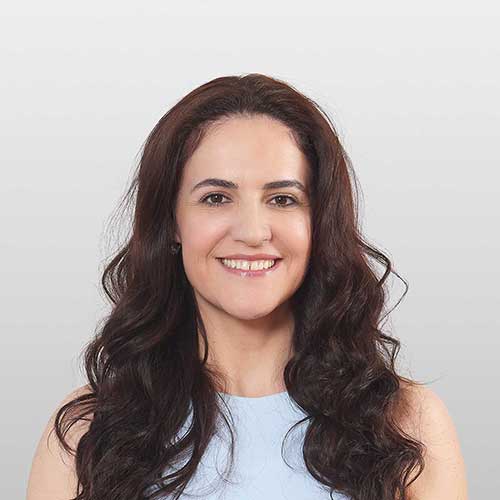
In this discussion, recorded in March 2026, Maiyuresh Rajah, Director of Investments at Aviva, explores how regulatory change and market evolution are reshaping the UK Defined Contribution (DC) landscape.

Drawing on his experience at Aviva, one of the biggest defined contribution (DC) workplace pension providers in the UK with over 4.8 million members, the conversation covers:

  • How regulatory developments, including consolidation and the emerging value‑for‑money framework, are shifting the focus from cost alone to a broader assessment of outcomes, performance and service quality.
  • Why increased scale is enabling DC schemes to access a wider range of asset classes, including private markets, and how this is influencing the design of default strategies.
  • Practical insights into how private markets can be incorporated into DC defaults, balancing growth, diversification and liquidity across the glidepath.
  • The growing importance of collaboration with specialist managers not only for asset allocation, but through ongoing dialogue, shared insight and innovation.
  • How partnership models can support schemes as they respond to regulatory change, member behaviour and evolving retirement needs, with the aim of delivering improved long‑term outcomes.

  • Investment risks

    The value of investments and any income will fluctuate (this may partly be the result of exchange rate fluctuations) and investors may not get back the full amount invested.

    Important information

    Data as at 31 March 2026.

    This is marketing material and not financial advice. It is not intended as a recommendation to buy or sell any particular asset class, security or strategy. Regulatory requirements that require impartiality of investment/investment strategy recommendations are therefore not applicable nor are any prohibitions to trade before publication.

    Views and opinions are based on current market conditions and are subject to change.

    EMEA5467899