
Markets and Economy Are we there yet? Bull market may have more miles
Brian Levitt
October 19, 2026

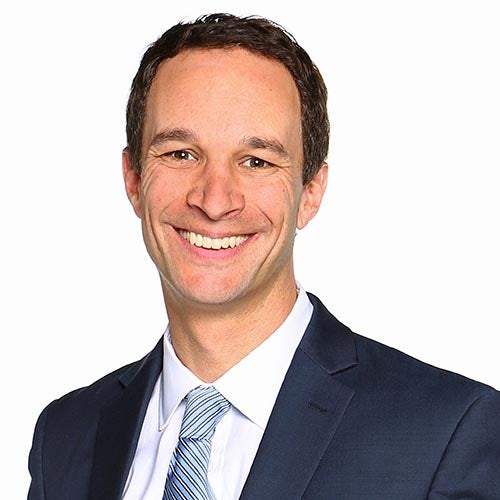

In his testimony to Congress last week, Fed Chair nominee Kevin Warsh emphasized the importance of Federal Reserve (Fed) independence.
Warsh appeared open to a more nuanced interpretation of inflation in an environment shaped by artificial intelligence (AI)-driven productivity gains, tariffs, and oil-related shocks.
Warsh signaled an interest in reducing the size of the Fed’s balance sheet, while being explicit that this isn’t something that can or should happen quickly.
This week, I’m going to take a brief break from talking about the conflict with Iran. Not because it lacks importance, but because it appears to be of fleeting interest to financial markets. Stocks hit all-time highs midweek and closed the week near those levels.1 Bond yields have generally been range-bound.2 Credit spreads have barely moved.3 The US dollar has generally weakened through April.4 In short, markets appeared to believe that the worst of the conflict is behind us and that conditions will improve over time.
At the same time, the economic data demonstrated resilience. Global manufacturing Purchasing Manager’s Index (PMI) readings, in the US and UK, remain strong and consistent with expansion.5 US retail sales surprised to the upside,6 reinforcing the view that the consumer remains engaged despite elevated gasoline prices.7 If markets are a forward-looking-discounting mechanism, they appear to be telling us that geopolitics is no longer the dominant variable and that the economic backdrop remains workable.
Instead, I want to focus this week on something that I believe will matter far more to the US economy and markets over the medium to longer term. That’s the leadership transition at the Federal Reserve (Fed). The fact that Kevin Warsh is emerging as the next chairman is noteworthy on several levels. Here are my three key takeaways from his testimony to Congress last week.
There’s concern about Fed independence and the fear that Warsh may be placed at the Fed to do the president’s bidding. In his testimony, Warsh emphasized the importance of Fed independence and suggested an intention to navigate policy choices without unnecessarily provoking the administration.8
Whether that balance can be maintained over time remains an open question, but for now, investors appeared to be willing to give him the benefit of the doubt. Longer-term US inflation expectations remain well-contained,9 suggesting that markets aren’t currently pricing in concerns about political interference in monetary policy.
Warsh’s tone is increasingly dovish compared to his first go-round at the Fed as a member of the Board of Governors. Back then, he was (inexplicably?) more hawkish in the aftermath of the Global Financial Crisis. What stood out most to me during last week’s hearings was his openness to a more nuanced interpretation of inflation, especially in an environment shaped by artificial intelligence (AI)-driven productivity gains, tariffs, and oil-related shocks.
Warsh’s support of inflation measures such as median inflation, which focuses on the middle observation, and trimmed mean inflation, which excludes extreme moves on both ends, may look to some like moving the goalposts. But in the current environment, they likely make more sense, in my view. The Fed shouldn’t be setting policy based on temporary price spikes driven by tariffs, war, or supply disruptions. These alternative measures are explicitly designed to look through those shocks and better capture underlying inflation trends.
In practice, this may not represent a dramatic break from how Chair Powell approached tariffs and geopolitical risks, but Warsh appeared more willing to formalize that framework by broadening the set of inflation indicators policymakers emphasize.
Balance sheet policy is the area where he sounded more hawkish at first, but there’s an important nuance. Warsh signaled an interest in reducing the size of the Fed’s balance sheet, while being explicit that it isn’t something that can or should happen quickly. He acknowledged that it took decades to build the balance sheet and that unwinding it will require time, patience, and care.
Just as important, any changes to balance sheet policy will require agreement across the Federal Open Market Committee (FOMC), reinforcing that this would be a deliberate and collective process rather than a unilateral shift in policy.
The upshot is that what I heard was broadly dovish, pragmatic, and respectful of institutional independence. Markets generally seemed to agree. I view this combination as supportive of stocks, and it reinforces my longstanding inclination not to fight the Fed.
| Date | Region | Event | Why it matters |
|---|---|---|---|
| April 27 | US | Dallas Federal Reserve Texas Manufacturing Survey (April) | Regional read on factory activity, prices, and labor conditions ahead of the national Institute for Supply Management (ISM) Manufacturing Index |
| April 28 | Japan | Bank of Japan policy decision/guidance | Policy signals can move yen, global rates, and risk sentiment, especially around inflation and yield-curve guidance |
| US | Conference Board Consumer Confidence (April) | High-frequency signal on household spending appetite and labor market perceptions | |
| US | S&P CoreLogic Case-Shiller Home Price Index (Feb.) | Measures housing inflation/wealth effects; feeds into shelter-cost views and financial conditions | |
| April 29 | US | Federal Open Market Committee (FOMC) rate decision and Chair press conference | Sets the policy path for US rates and risk assets; guidance drives expectations for cuts/hikes and balance sheet policy |
| Canada | Bank of Canada rate decision | Key driver of Canadian rates and dollar; updated forecasts shape expectations for inflation and growth | |
| April 29 | Germany | Consumer Price Index (CPI) (April preliminary) | Major input to euro area inflation expectations ahead of the eurozone flash CPI |
| US | Gross domestic product (GDP) (Q1, advance) | Broad measure of US growth momentum; influences earnings expectations and Fed policy outlook | |
| US | Personal income and outlays; personal consumption expenditures (PCE) inflation (March) | Fed’s preferred inflation gauge and a read on consumer demand via spending and real incomes | |
| US | Employment Cost Index (Q1) | Key wage/compensation inflation indicator watched by the Fed for services inflation persistence | |
| April 30 | Eurozone | Gross domestic product (GDP) (Q1, Flash) and Consumer Price Index (CPI) (Apr, Flash) | Shapes the European Central Bank (ECB) policy debate: growth resilience vs. disinflation progress; can move euro and bund yields |
| Eurozone | ECB policy decision/guidance | Defines the euro area rate path and balance sheet stance; key driver of the euro and European financial conditions | |
| UK | Bank of England policy decision/guidance | Impacts sterling, gilts, and UK financial conditions; signals the pace of easing/tightening vs. inflation | |
China | National Bureau of Statistics (NBS) Purchasing Manager’s Index (PMI) (April) | Early look at China’s manufacturing/services momentum; can move commodities, emerging market (EM) assets, and Asia risk sentiment | |
Canada | Gross domestic product (GDP) (Feb.) | Key read on monthly growth; informs Bank of Canada outlook and near-term recession/soft-landing debate | |
May 1 | US | ISM Manufacturing Purchasing Manager’s Index (PMI) (April) | Market-moving snapshot of factory activity, prices, and orders; helps gauge growth/inflation balance after the Federal Reserve and GDP/PCE |
Europe/Japan/China | Labor Day market holidays (selected exchanges) | Lower liquidity can amplify price moves and widen bid-ask spreads; important for execution and risk management |


Important information
NA5429718
Image: Douglas Rissing / Getty
All investing involves risk, including the risk of loss.
Past performance does not guarantee future results.
Investments cannot be made directly in an index.
This does not constitute a recommendation of any investment strategy or product for a particular investor. Investors should consult a financial professional before making any investment decisions.
Credit spread is the difference in yield between bonds of similar maturity but with different credit quality.
The Dallas Federal Reserve conducts the Texas Manufacturing Outlook Survey monthly to obtain a timely assessment of the state’s factory activity. Firms are asked whether output, employment, orders, prices, and other indicators increased, decreased, or remained unchanged over the previous month.
Dovish refers to an economic outlook that generally supports low interest rates as a means of encouraging growth within the economy
The Federal Open Market Committee (FOMC) is a committee of the Federal Reserve Board that meets regularly to set monetary policy, including the interest rates that are charged to banks.
Hawkish describes a central bank or policymaker's preference for a tighter monetary policy, typically to combat inflation.
Inflation is the rate at which the general price level for goods and services is increasing.
Median inflation (often measured via Median CPI) is a trimmed-mean metric representing the price change of the component in the 50th percentile of a weighted basket of goods.
Monetary easing refers to the lowering of interest rates and deposit ratios by central banks.
Option-adjusted spread (OAS) is the yield spread that must be added to a benchmark yield curve to discount a security’s payments to match its market price, using a dynamic pricing model that accounts for embedded options.
Purchasing Managers’ Indexes (PMI) are based on monthly surveys of companies worldwide and gauge business conditions within the manufacturing and services sectors.
The S&P 500® Index is an unmanaged index considered representative of the US stock market.
In general, stock values fluctuate, sometimes widely, in response to activities specific to the company as well as general market, economic, and political conditions.
A trimmed mean inflation rate is a measure of underlying inflation that calculates the average price change after removing (or trimming) a specific percentage of the most extreme, or outlier, price increases and decreases.
The opinions referenced above are those of the author as of April 24, 2026. These comments should not be construed as recommendations, but as an illustration of broader themes. Forward-looking statements are not guarantees of future results. They involve risks, uncertainties, and assumptions; there can be no assurance that actual results will not differ materially from expectations.
This link takes you to a site not affiliated with Invesco. The site is for informational purposes only. Invesco does not guarantee nor take any responsibility for any of the content.
Change site/location
